


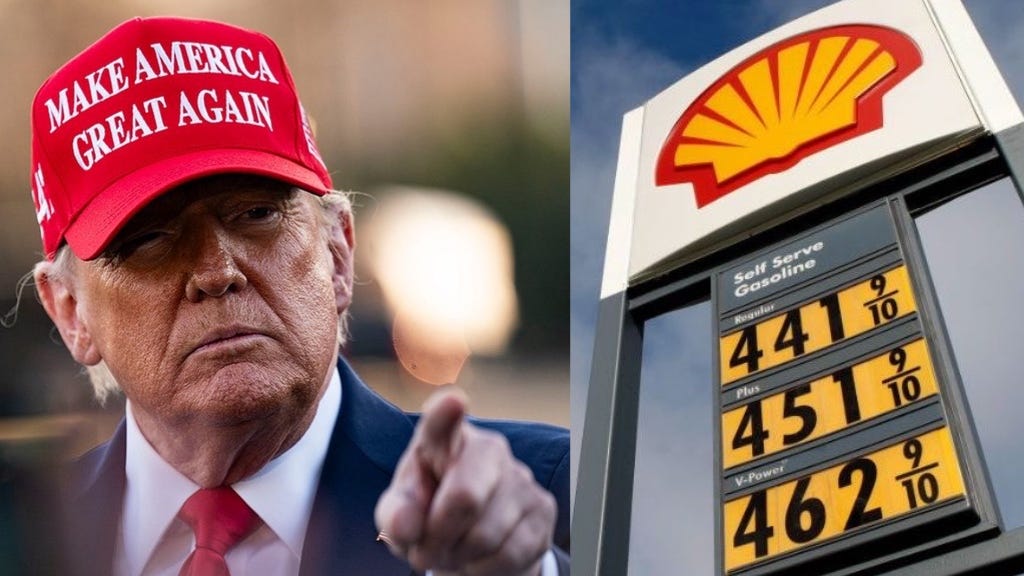
90 days in, the bill is no longer abstract. It is at every gas station in America.
Last weekend, 45 million Americans got in their cars and drove somewhere for Memorial Day. They packed coolers, loaded up kids, mapped routes, and pulled into gas stations along the way.
And they paid.
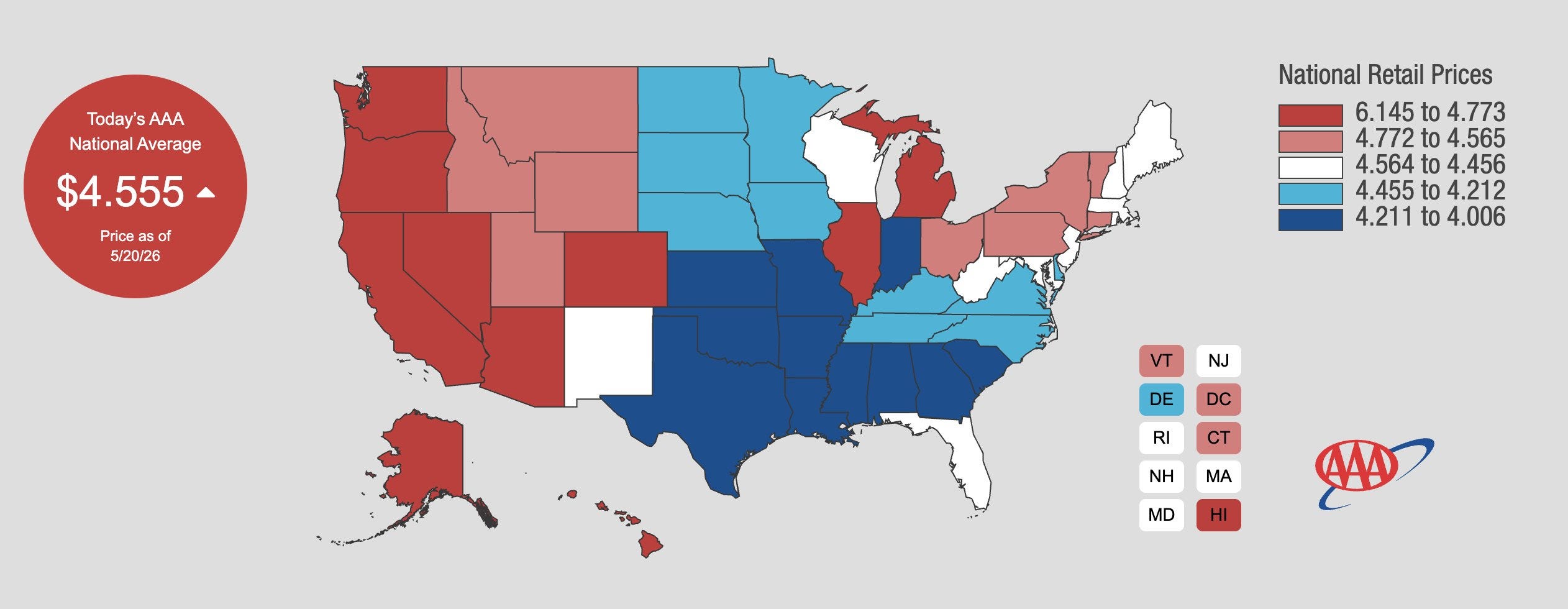
The national average stood at $4.55 per gallon on the Friday before Memorial Day, an increase of more than 50 percent since the United States and Israel began the war with Iran on February 28th. It is the most Americans have paid on Memorial Day weekend since 2022, when Russia invaded Ukraine. 
Over the course of the long weekend, American drivers spent approximately $7 billion on gasoline, about $2 billion more than they spent last year. 
Two billion extra dollars. In a single weekend. To drive to the same places they drove last year.
That is not a macroeconomic data point. That is money that did not go toward groceries, rent, a credit card payment, or a kid’s summer activity. It went into a tank, and the reason it cost that much is a 21-mile strait on the other side of the world that has been effectively closed for 90 days.
What is actually driving the price
The answer is not complicated. Patrick De Haan, head of petroleum analysis at GasBuddy, said more than 90 percent of the price difference compared to last year is directly tied to the Iran war and the ongoing blockade of the Strait of Hormuz.
Since the day before the war began, gasoline prices are up roughly 51.5 percent. Diesel is up 49.8 percent. Jet fuel has surged 56 percent. These are not gas pump numbers anymore. They are embedded in the price of everything that gets shipped, flown, or trucked across this country, which is almost everything.
The surge in gas prices pushed the US inflation rate to nearly 4 percent in April. For the first time in three years, real wages adjusted for inflation are shrinking. Consumer prices are going up faster than paychecks.
Chris Haenel, a computer repair technician from Pittsburgh, put it as plainly as any economist could. “Every day, I drive by the gas station and it’s just insane,” he said. “My wife comes home with three bags of groceries and it’s $300. I’m 60 years old and trying to save for retirement, but this is limiting how much I can save.”
That is the Iran war in one paragraph. Not strategy. Not geopolitics. Three bags of groceries and $300.
What Trump said about it
On Tuesday, Trump told reporters he is not thinking about the finances of Americans “even a little bit” as he negotiates with Iran. “I don’t think about Americans’ financial situation,” he said. “I don’t think about anybody. I think about one thing: We cannot let Iran have a nuclear weapon.”
Earlier in the week he called the price of gas “peanuts” compared to the cost of Iran obtaining nuclear weapons, adding that he “appreciates everybody putting up with it for a little while” and that prices won’t stay high “much longer.”
The problem with “much longer” is that it has no meaning without a deal. And right now there is no deal.
Analysts predict that even if the Strait immediately reopened today, prices would likely stay elevated above pre-war levels until 2027. The damage to global energy supply chains is not a light switch. It does not turn off the moment diplomats shake hands. Inventories take months to rebuild. Shipping routes take time to normalize. The pain at the pump will outlast whatever agreement eventually gets signed, by months.
What comes next at the pump
Analysts are warning prices could hit $5 per gallon next month. Research shows that when gas hits $5, behavior starts to change. Three quarters of Americans say they would alter their driving habits at that level. That is the threshold where summer road trips get canceled, where commuters start carpooling out of necessity rather than choice, where small businesses that run fleets start making hard decisions.
Global oil inventories are declining fast, with just four to six weeks until gasoline, diesel and jet fuel prices shoot higher as the buffers run down. The shock absorbers that have cushioned the first 90 days of this war are almost gone. What comes after them is the raw price of a world without enough oil moving through the right places.
The bottom line
The Iran war has a body count and a geopolitical score that historians will argue about for decades. It also has a gas pump price that 45 million Americans felt personally last weekend, and will feel again every time they fill up this summer.
$4.48 on Memorial Day. Up from $3.14 a year ago. That extra $1.34 per gallon is not a rounding error. Multiplied across every commute, every delivery truck, every flight ticket, every grocery shipment in America, it is an enormous and ongoing tax on ordinary life, paid not to the government but to the consequences of a war that was launched 90 days ago and has not yet produced a deal.
Trump says it will not last much longer. We will keep checking the price board at the gas station until he is right.
That is what this letter is for.
— US Daily Letter | May 28, 2026