


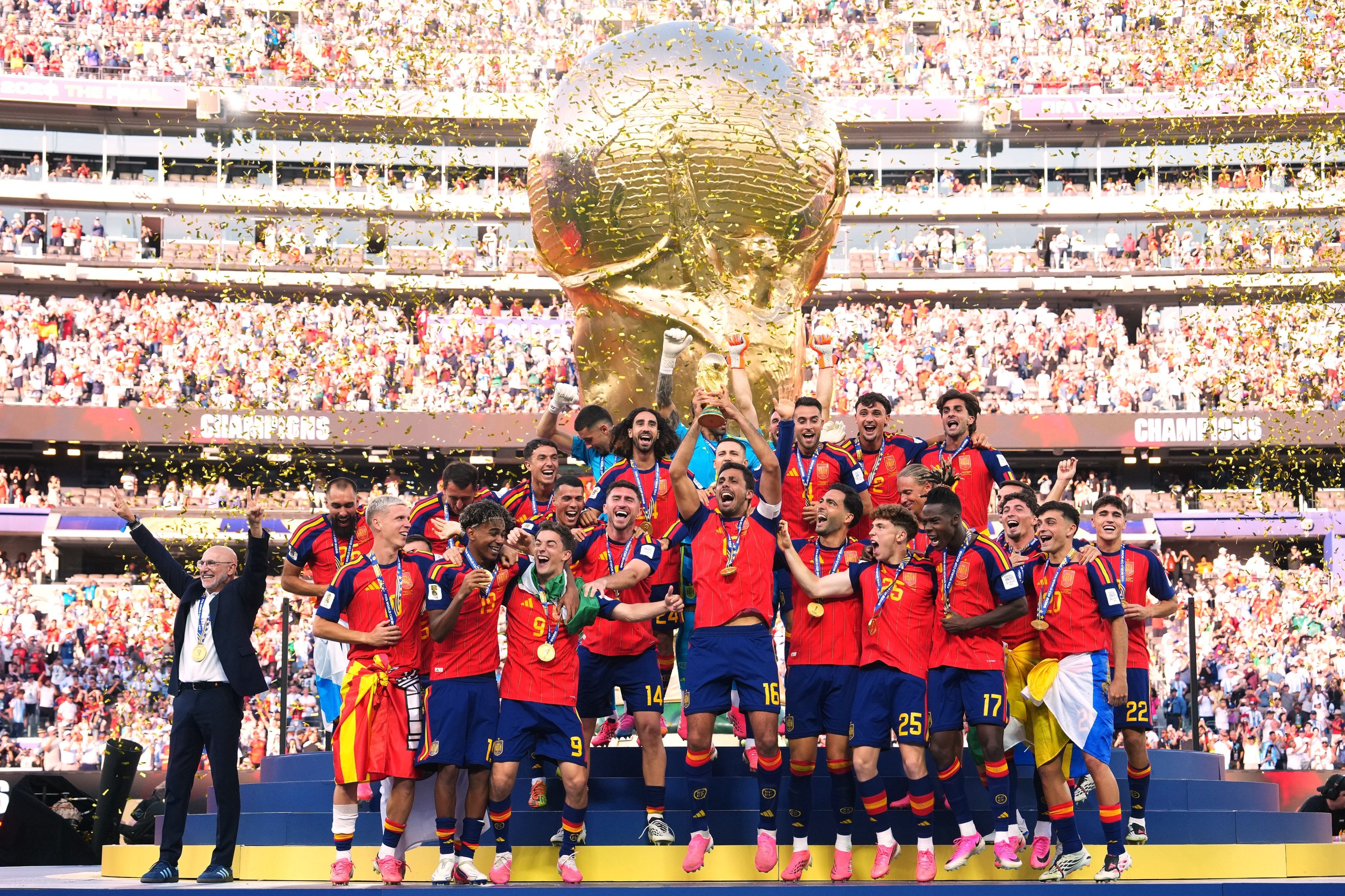
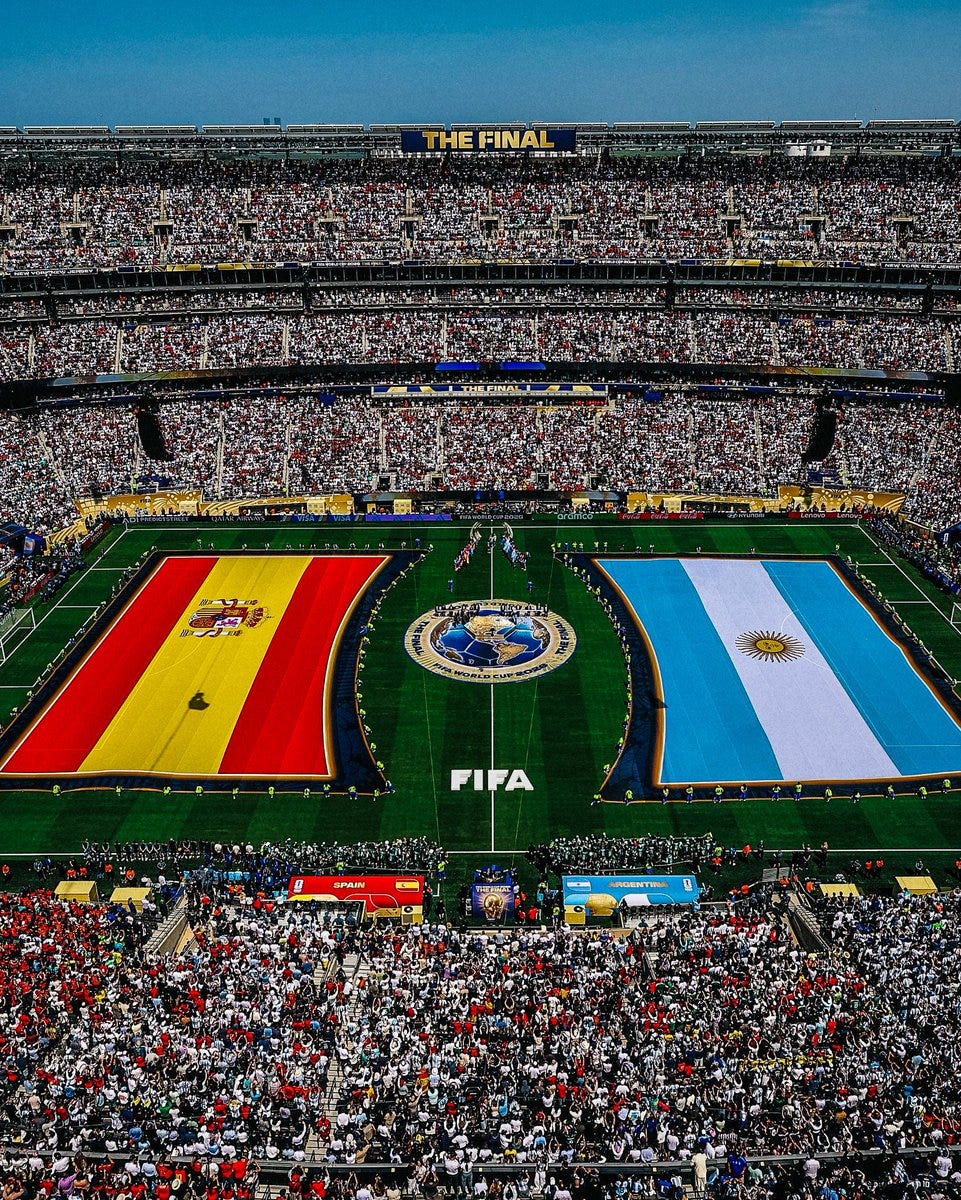
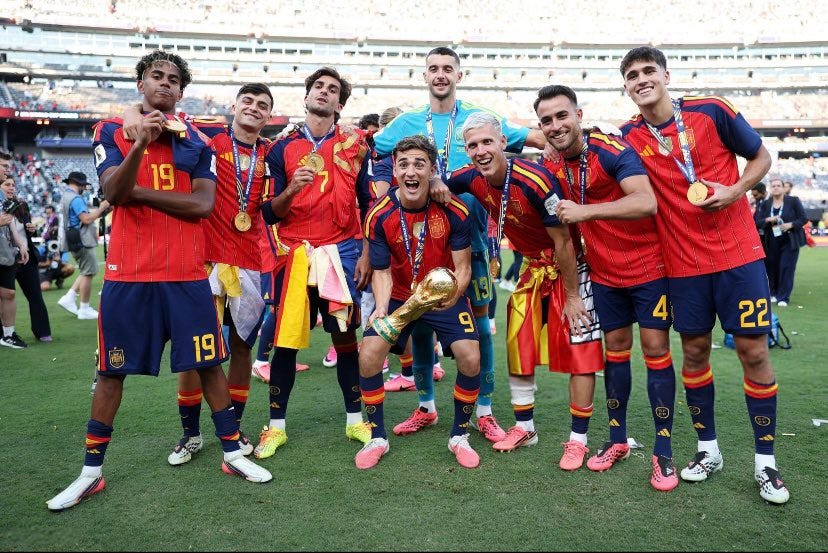
Sunday night, July 19th, 82,500 people packed into a stadium in East Rutherford, New Jersey, ten miles west of Midtown Manhattan, and watched Spain beat Argentina 1-0 in extra time to become the world champions of soccer. Ferran Torres scored the only goal in the 106th minute, a thunderous finish that settled 120 minutes of relentless, suffocating, beautiful football. Lionel Messi, 39 years old, played every minute and touched the ball 43 times and did not score. Spain’s midfield, built around Rodri and Gavi and Pedri, controlled the game so completely that Argentina, the defending champions, managed just two shots in 120 minutes with none on target.
It was, by every measure, a worthy final to an extraordinary tournament.
Now that the confetti has settled and the Spanish players have stopped crying and the Argentinian ones have stopped sitting on the grass staring at the sky, it is worth stepping back and telling you what actually happened over the last 39 days. Not just on the field. But to this country, to this continent, and to America’s complicated, beautiful, reluctant relationship with the sport the rest of the world has always called its own.
The numbers first, because they are extraordinary
6,810,966 fans attended matches across the 39 days of the 2026 FIFA World Cup. That is nearly double the previous all-time attendance record, set in the United States in 1994. To put that in perspective: 6.8 million people watched 104 matches across 16 cities in three countries. More than the population of Massachusetts attended a soccer tournament this summer.
The opening match at AT&T Stadium in Arlington, Texas drew 105,329 fans, the largest crowd ever recorded for a World Cup opener. Hotels in host cities reported 95 percent occupancy rates during match weeks. Restaurants and bars near stadiums saw revenue spikes of 300 percent or more in some cases. The tournament generated an estimated $40.9 billion in global economic activity. New York City’s tourism CEO described hosting the World Cup as the equivalent of six or seven or eight Super Bowls compressed into a roughly six-week period.
That is what just happened in your backyard. And most Americans caught only glimpses of it.
What the tournament actually was
Start with the structure, because it was unlike anything that has ever been attempted in sports.
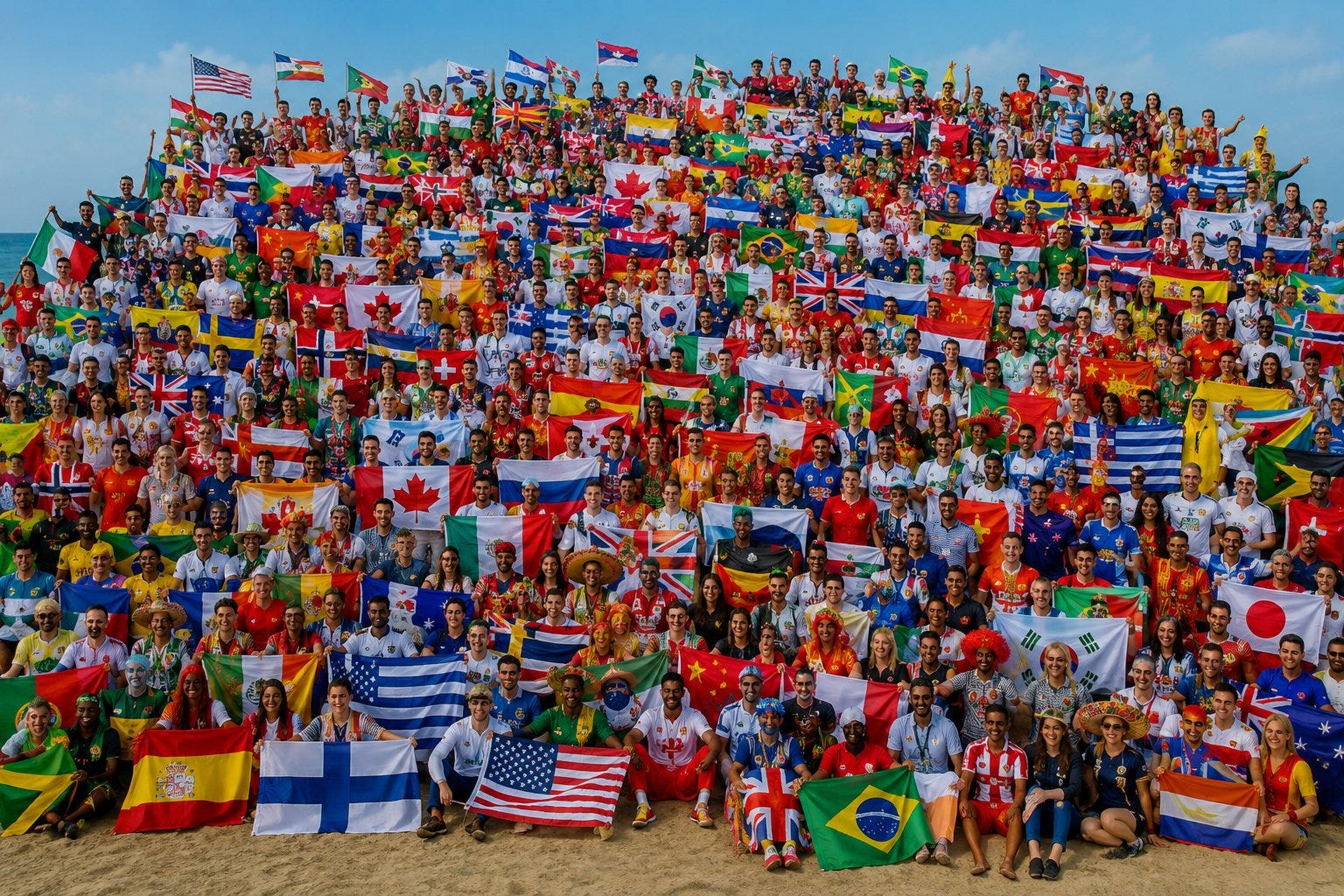
Forty-eight teams. Three countries. Sixteen cities stretching from Vancouver to Guadalajara, from Boston to Miami, from Kansas City to Los Angeles. The tournament opened at Estadio Azteca in Mexico City on June 11th, the most storied stadium in the history of the sport, hosting its third World Cup. It closed 39 days later at MetLife Stadium in New Jersey, where the home of the New York Giants and Jets was transformed into something that drew comparisons to the great cathedrals of European football.
In between, something happened that no single statistic fully captures. Fans from Morocco set up camp in Dallas and turned it into a second Casablanca for three weeks. Norwegian supporters, representing a country of 5 million people, filled stadiums from coast to coast behind a 25-year-old named Erling Haaland who ran like a freight train and smiled like a kid at Christmas. Brazilian fans, wrapped in yellow and green, spent two weeks in Los Angeles before their team lost to Norway in the quarterfinals and then, remarkably, mostly stayed and kept watching. Because the football was too good to leave.
Mexico did not advance past the group stage. The host nation’s exit was quiet and painful and absorbed with the kind of stoic dignity that Mexican football fans have perfected across generations of heartbreak. The United States lost to Belgium in the round of 16, 4-1, in a match most Americans found by accident while flipping channels and then could not stop watching. Both exits left behind fan bases that had been changed by the experience of watching the game up close, inside stadiums, against the best players on earth.
The stories this tournament produced
Norway eliminating Brazil. That sentence alone deserves its own paragraph. Brazil, five-time champions, the country that invented the vocabulary of beautiful football, eliminated by a Scandinavian nation that had never previously qualified for a World Cup in the modern era. Haaland scored twice. The Brazilian players stood on the field afterward in stunned silence. The Norwegian players did not know what to do with themselves and several of them simply sat down on the grass and wept.
Morocco reaching the semifinals for the second consecutive World Cup, becoming the first African nation in history to achieve that feat twice. Their fans, traveling from across the diaspora, turning every host city they arrived in briefly into North Africa, creating the loudest and most joyful atmosphere in the tournament. They lost to Spain in the semis but left with the dignity of a team that had nothing to prove to anyone and proved everything anyway.
Messi. The subject of Messi deserves more than a sentence and cannot adequately be captured in a newsletter. He is 39 years old. He is the greatest footballer who has ever lived, and at this point that assessment is no longer seriously contested by anyone who has watched him play. He won the Golden Ball as the tournament’s best player despite not winning the Golden Boot and despite not winning the final. He finished with 8 goals and 5 assists across the tournament, leading the all-time World Cup scoring record further beyond the reach of anyone who might one day try to follow him. In the final, Spain contained him completely, and it took a team of that quality, playing that perfectly, to do it. He walked off the MetLife field Sunday night to a standing ovation from 82,500 people, including the Spanish supporters who had just beaten him. That ovation was not for what he did in the match. It was for what he has been. The stadium understood it was watching the last chapter of something that will not come again.
What it meant for America
Here is the thing that is hardest to quantify and most important to say.
Soccer has been trying to break through in the United States for fifty years. The 1994 World Cup was supposed to do it. The launch of MLS was supposed to do it. Messi coming to Inter Miami was supposed to do it. Each time, the sport made progress and then the momentum plateaued, and the skeptics said Americans would never really embrace it the way the rest of the world does.
This summer was different. Not because of one moment but because of the accumulation of 39 days of moments that happened in American cities, in American stadiums, with American crowds in them. The family in Kansas City that bought tickets to the Argentina-Switzerland quarterfinal as a curiosity and ended up screaming for 90 minutes they did not understand they were capable of. The bar in Atlanta that put the France-Spain semifinal on all 14 screens because the demand was too loud to ignore. The eight-year-old in Boston who watched Norway knock out Brazil and decided on the spot that she wanted to play.
After the 1994 World Cup, youth soccer registrations in the United States doubled within five years. The 2026 tournament was ten times larger, ten times more visible, spread across eleven American cities rather than nine, and ended in a stadium ten miles from the most media-saturated city on earth. The registration spike that is coming will be felt in youth leagues across the country for a generation.
The tournament also did something softer and harder to measure. For 39 days, fans from 48 nations walked through American airports and American neighborhoods and American stadiums. They brought their flags and their food and their noise and their completely irrational love for a sport that lasts ninety minutes and feels like a lifetime. They found, in most cases, American strangers who were happy to see them. In a summer defined by war and politics and heat deaths and election speeches, the World Cup was the counterpoint that nobody planned for and everyone needed.
Spain. The deserving champions.
They were the best team in the tournament from the group stage to the final. They did not concede a goal in the knockout rounds until the semifinal against France. Their midfield is generational in the same way that the 2010 Spanish team’s midfield was generational, built around total possession and movement that exhausts opponents physically and mentally before they realize what is happening. Ferran Torres, who scored the winner in the 106th minute, had been one of Spain’s quieter players across the tournament. He chose the right moment to be loud.
Spain is now the first nation to hold both the men’s and women’s World Cup simultaneously. They won in South Africa in 2010. Their women won in Australia in 2023. Now this. For a country that spent much of the last fifteen years in political turmoil, the national team has been the one thing that worked, the one institution that unified rather than divided. Sunday night in New Jersey, wearing their deep red shirts against Argentina’s blue and white, they were very simply the best team on the planet. No asterisk required.
The bill and what it tells you
One number from this summer deserves more attention than it has received. Hotel bookings in host cities ran at about 80 percent of initial projections, driven partly by visa barriers and geopolitical concerns that deterred overseas fans from traveling to the United States. International fans who wanted to come and could not, because the visa process was too slow, too uncertain, or too intimidating in the current political environment. FIFA and US Soccer have already flagged this as the single largest structural problem with the American hosting experience, and the one most likely to affect the 2028 Los Angeles Olympics and any future major events on US soil.
The stadiums were full. The fan festivals drew 5.5 million additional visitors beyond ticket holders. The economic impact was historic. And still the country left some of the potential on the table because people from certain nations could not get through the front door quickly enough. That is worth naming, not to relitigate immigration policy, but because the next time America hosts a tournament this size, somebody needs to have solved it.
The bottom line
The 2026 FIFA World Cup is over. Spain won. Nearly 7 million people attended. Forty billion dollars moved through the North American economy. Messi played his last World Cup match at 39 years old and received a standing ovation from the team that beat him. Norway knocked out Brazil. Morocco made history twice. The United States lost in the round of 16 and the country cared more than it expected to.
39 days. 104 matches. 16 cities. 48 nations. One continent temporarily united by a sport that does not care about your language, your politics, your gas prices, or your election speeches. It just asks you to watch. And for one extraordinary summer, more Americans than ever did exactly that.
The lights at MetLife went out Sunday night around midnight. The field crew started pulling up the corner flags. The stadium that had roared for 120 minutes went quiet in about twenty-five. Somewhere in the parking lot, an Argentine fan was still sitting in his car, unable to drive yet, listening to the radio.
Somewhere else, a Spanish player was calling his mother.
That is the World Cup. That is what just happened here.
That is what this letter is for.
— US Daily Letter | July 20, 2026