


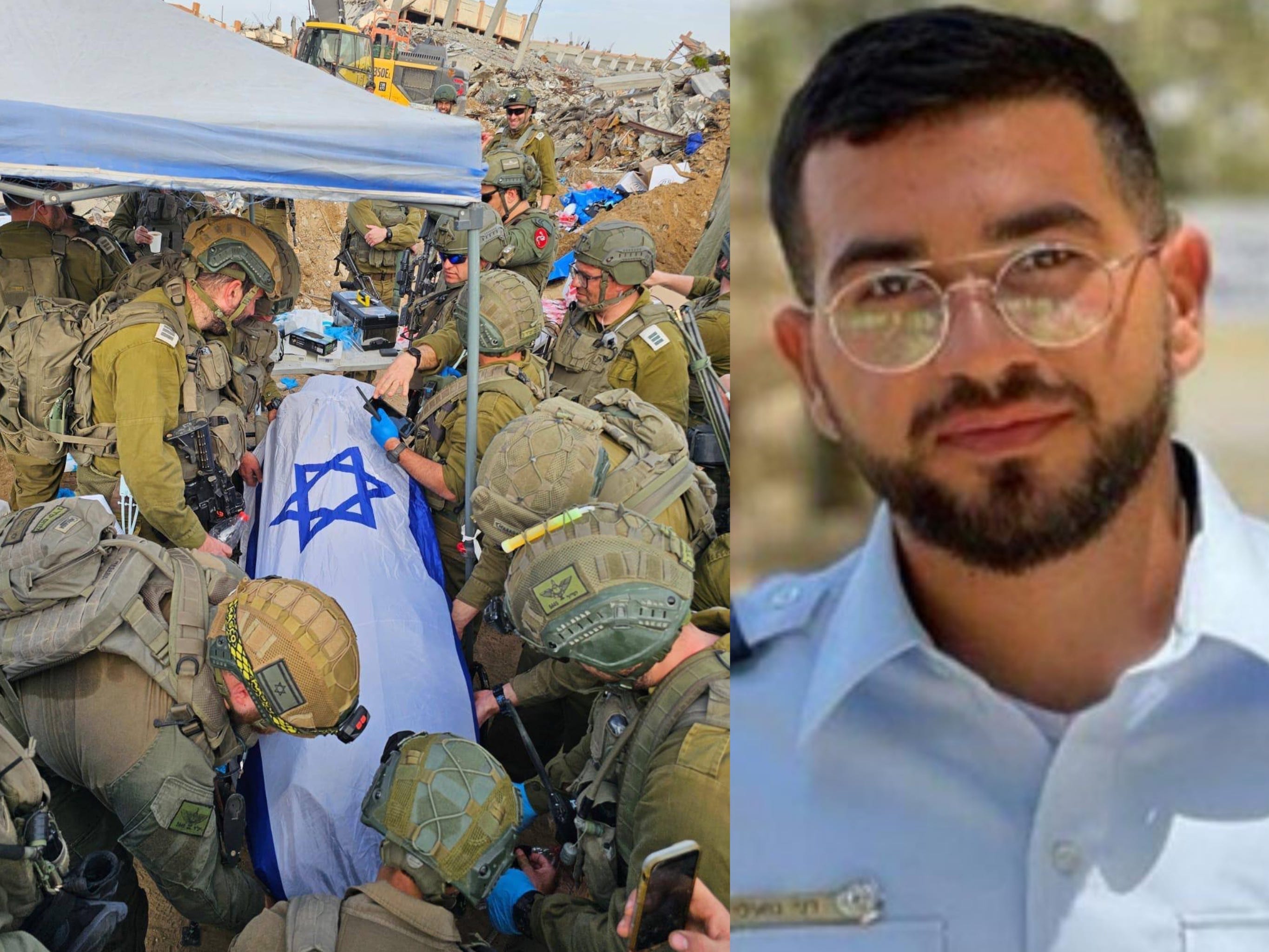
TEL AVIV — On Monday morning, Israeli Prime Minister Benjamin Netanyahu removed the yellow ribbon pin he had worn for 843 days. So did every member of his cabinet. The pins represented the hostages held in Gaza since the October 7, 2023 attacks.
There are no more hostages to represent.
“We have brought back Rani Gvili, of blessed memory, a hero of Israel,” Netanyahu told parliament. “There are no more hostages in Gaza.”
Ran Gvili was 24 years old when Hamas militants stormed the border on October 7, 2023. A special forces policeman, he died fighting that day. Palestinian Islamic Jihad took his body to Gaza. For 843 days—more than two years and three months—his family demanded his return. They held vigils. They lobbied government officials. They appeared on television. They refused to let Israel forget.
Over the weekend, Israeli forces launched what they called a “large-scale operation” in a cemetery in northern Gaza. They exhumed bodies of deceased Palestinians, one after another, until dental experts identified Gvili’s remains among the dead.
He will finally be buried on Israeli soil.
He was the last.
Hamas-led fighters captured 251 hostages on October 7, 2023, according to Israeli authorities. Some were released in prisoner exchanges. Some died in captivity. Some were killed in Israeli airstrikes. Some remain unaccounted for, their fates still unknown. The return of all remaining hostages—alive or dead—was the cornerstone of the ceasefire’s first phase, which took effect in October 2025.
Gvili’s recovery closes that chapter. What comes next will determine whether the ceasefire holds or whether Gaza descends back into war.
President Trump celebrated the news from Washington. So did his son-in-law Jared Kushner, who credited himself, Trump, and U.S. special envoy Steve Witkoff with brokering the arrangement alongside the CIA, Israeli intelligence, and Palestinian intermediaries. “For the first time since 2014, there are no Israeli hostages held in Gaza,” Kushner wrote on social media.
The recovery was presented as a triumph of diplomacy. But it also exposes the chasm that remains.
The ceasefire agreement calls for Hamas to disarm and for Israel to withdraw from Gaza. An “international stabilization force”—undefined, unformed, and not yet agreed upon—would deploy to fill the vacuum. Retrained Palestinian police would take over security, though no one has explained how officers who fled or were killed during the October 7 attacks will be reconstituted. A technocratic committee would govern Gaza, replacing Hamas, though Hamas has given no indication it will cede control.
Netanyahu made his position explicit: “The next stage is not reconstruction—the next stage is disarming Hamas and demilitarizing Gaza.”
Hamas has signaled it will lay down heavy weapons only in tandem with Israeli withdrawal. Neither side trusts the other to go first. Negotiations on these contentious points have not yet begun. Both sides are waiting to see who blinks.
Meanwhile, Gaza itself continues to suffer. Most of the 2.3 million residents are enduring another rainy winter without adequate shelter. Several infants have died from exposure to cold in recent weeks. The Civil Defense rescue services say thousands of bodies remain buried under rubble, impossible to retrieve without heavy equipment that Israel has not allowed into the Strip. They have called for construction machinery and reconstruction materials to enter through the Rafah crossing.
Israel announced it would partially reopen the Rafah border with Egypt for the first time since May 2024, allowing vetted Palestinians to enter and exit. But the crossing will not facilitate direct aid shipments from Egypt. International journalists remain barred from freely entering Gaza, making independent verification of conditions on the ground nearly impossible.
Palestinian activists accuse Israel of holding the bodies of hundreds of dead Palestinians, including children, in military morgues. Hamas provided the information that helped Israeli forces locate Gvili’s body in the cemetery. Each side now claims it has fulfilled its obligations under the agreement. Each side accuses the other of stalling.
The hostage crisis—the most visible and politically charged element of the conflict—is over. The underlying questions remain unresolved.
Who governs Gaza when this ends? Who provides security? Who rebuilds? Who pays? And most critically: who disarms first?
There are no yellow ribbons for those questions. Only the slow, grinding work of negotiation between parties who have spent 843 days—and decades before that—learning not to trust each other.
After 843 days, the final hostage is home. The hardest part is just beginning.