


Trump wanted rate cuts. What he got is more complicated than that.
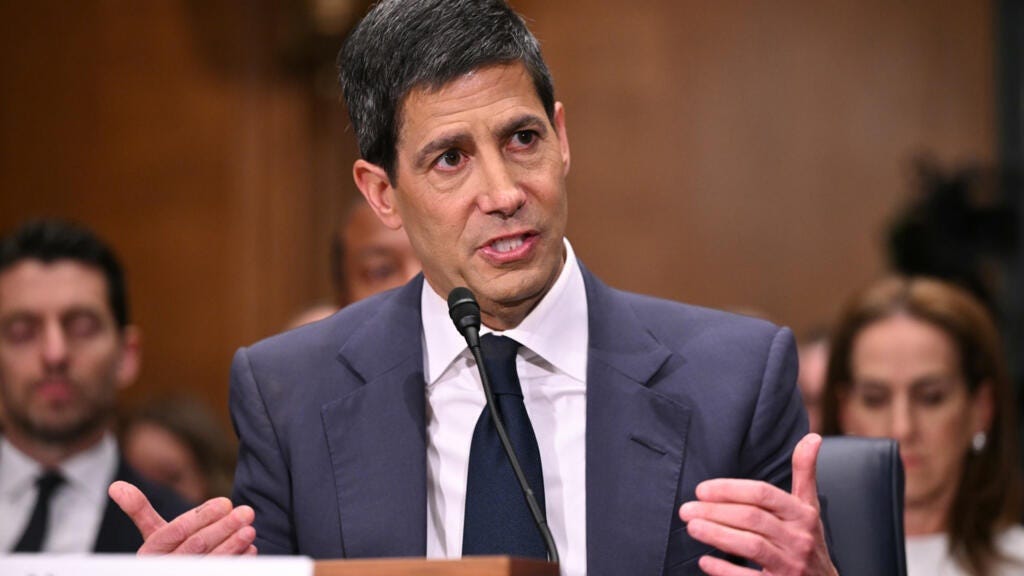
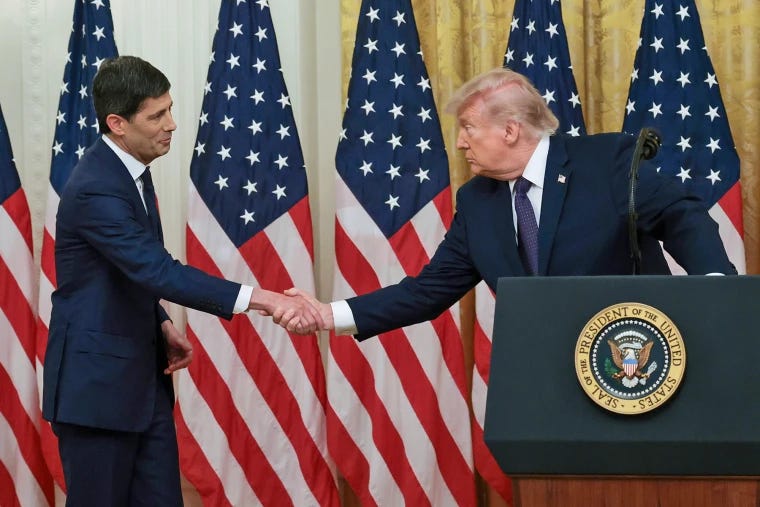
Last Friday morning, Kevin Warsh walked into the East Room of the White House, raised his right hand, and was sworn in as the 17th Chair of the Federal Reserve by Supreme Court Justice Clarence Thomas.
It was the first time a Fed chair had been sworn in at the White House since Alan Greenspan in 1987. That detail is not ceremonial trivia. It is a statement about how close the president wants to keep the one institution specifically designed to operate at arm’s length from political pressure.
Trump could not contain himself. “I had a rotten head of the Fed, and now I have a great head of the Fed,” he told a rally in New York that same evening, adding that interest rates would be coming down “very quickly.”
Here is the problem. Kevin Warsh may not cut interest rates. And the reasons why tell you almost everything important about the American economy right now.
Who he actually is
Warsh is not a loyalist handed a job he cannot do. He is a former Fed governor who served during the 2008 financial crisis, a Stanford fellow, and a man with strong views that do not simply amount to whatever Trump wants.
He wants to sell off most of the Fed’s $6.7 trillion balance sheet and return the central bank to a passive observer of markets rather than an active participant. He wants to eliminate the Fed’s famous quarterly interest rate forecast chart in favor of more flexible communication. He wants to strip the Fed of involvement in climate policy and diversity initiatives, which aligns with Trump’s view that the central bank “lost its way” under Powell.
In short, Warsh is a hawk with his own agenda.
What Trump wants and probably will not get
Fed policymakers had projected rate cuts later this year but have shifted their thinking as energy prices surge and geopolitical instability grows. The majority now favor holding rates steady. Some are floating the possibility of a rate hike.
That last sentence and Trump’s rally promises exist in direct contradiction. The Fed held its benchmark rate at 3.50 to 3.75 percent at its last meeting, with four dissents, the most divided the committee has been since 1992. Gas at $4.55 a gallon is feeding inflation across food, shipping, and manufacturing. The Fed’s job in that environment is to hold or raise, not cut.
As of mid-May, less than 3 percent of investors believed there would be a rate cut at any remaining FOMC meeting this year. Markets are essentially betting Trump gets nothing he wants from his new chair for the rest of 2026.
When senators asked Warsh directly whether Trump had pressured him on rates, he was unequivocal: “The president never asked me to predetermine, commit, fix, decide on any interest rate decision in any of our discussions, nor would I ever agree to do so.”
What it means for you
Your mortgage rate is not going down anytime soon. Your credit card APR is not dropping. The home you want to buy is not getting more affordable this summer.
In three weeks, Warsh chairs his first Federal Open Market Committee meeting. That will be the first real test of everything: his independence, his ability to manage a deeply divided committee, and his willingness to tell a president who already announced the outcome something he does not want to hear.
The gap between what Trump is promising and what Warsh is likely to deliver is significant. How that plays out will determine whether the economic pain of the Iran war gets worse before it gets better.
One man now holds enormous influence over that question. He was sworn in last Friday in the East Room, with the president standing next to him, while outside the Strait of Hormuz was still closed and gas was still $4.55 a gallon.
Good luck to him.
That is what this letter is for.
— US Daily Letter | May 28, 2026