


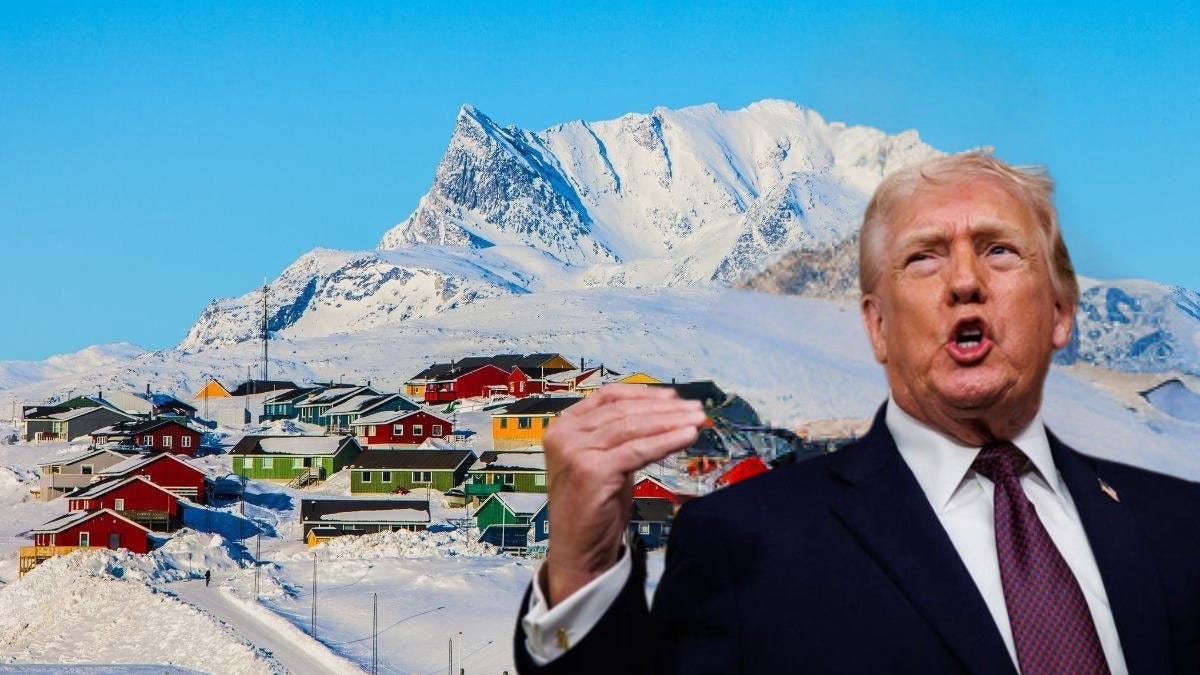
President Trump’s push to acquire Greenland—complete with hints that military or economic pressure might be on the table—feels like watching two very different worldviews crash into each other. There’s a strategic logic buried in there somewhere. But the way it’s being framed? That’s where things go off the rails.
Let’s be clear about one thing: Greenland actually matters.
As the Arctic warms and ice melts, Greenland has become genuinely important. It’s sitting on rare earth minerals we need for everything from smartphones to missiles. New shipping routes are opening up through Arctic waters. And there’s critical defense infrastructure already there—early warning systems, missile defense, the works. Meanwhile, China’s been quietly making moves in the region, and Russia’s not exactly being subtle about militarizing its northern frontier. So yeah, Washington paying attention to Greenland? That makes sense. We even tried to buy it back in 1946 for $100 million. The strategic logic hasn’t gone away—if anything, it’s gotten stronger.
But here’s the thing: strategy isn’t just about grabbing valuable real estate. It’s about understanding the actual situation on the ground—and this is where the whole plan starts falling apart.
Denmark isn’t some struggling country looking to unload territory. They’re our ally. Our NATO ally. And Greenland isn’t just a frozen chunk of rock waiting for someone to claim it. It’s home to 57,000 people who govern themselves and have made it pretty damn clear they’re not interested in becoming American. When Denmark’s prime minister said “Greenland is not for sale,” she wasn’t playing diplomatic games. She was stating an obvious fact.
And then there’s the military force talk. That’s where this goes from questionable to genuinely counterproductive.
We don’t operate in the Arctic by ourselves. Our whole advantage up there comes from working closely with allies—Denmark, Norway, Iceland, the countries along NATO’s northern edge. When you start throwing around the idea of pressuring a NATO ally, you’re not showing strength. You’re breaking trust. You’re undermining the exact alliance system that helps us keep Russia and China in check.
The frustrating part? We already have what we need in Greenland—without owning it. Pituffik Space Base (most people still know it as Thule) is proof that American and Greenlandic interests can align just fine when there’s mutual respect involved. Greenland’s dealing with real challenges—economic pressures, infrastructure needs, climate change hitting them harder than most places. There’s so much room for deeper partnerships on defense, mining, energy, logistics—all of it. But only if we approach it like partners, not like we’re planning a takeover.
That’s the conversation we should be having.
Instead, we’re talking about annexation and pressure tactics, which turns a genuine opportunity into a mess. It hands propaganda victories to Beijing and Moscow on a silver platter. It makes our European allies nervous about whether they can count on us. And it pushes Greenlanders away from us instead of bringing them closer.
The really frustrating part? A softer approach could actually work.
Imagine a serious Arctic partnership—infrastructure investment, climate adaptation support, education programs, economic development—designed to genuinely help Greenland while advancing our strategic interests. Respect their right to make their own decisions, and influence follows naturally. Try to strong-arm them, and watch doors slam shut.
What we’re seeing now is basically 19th-century empire-building logic crashing headfirst into how the world actually works in 2026. It doesn’t serve our strategic goals, and it sure as hell doesn’t align with our democratic values.
In today’s Arctic, power won’t go to whoever makes the biggest threats. It’ll go to whoever builds the strongest partnerships.