


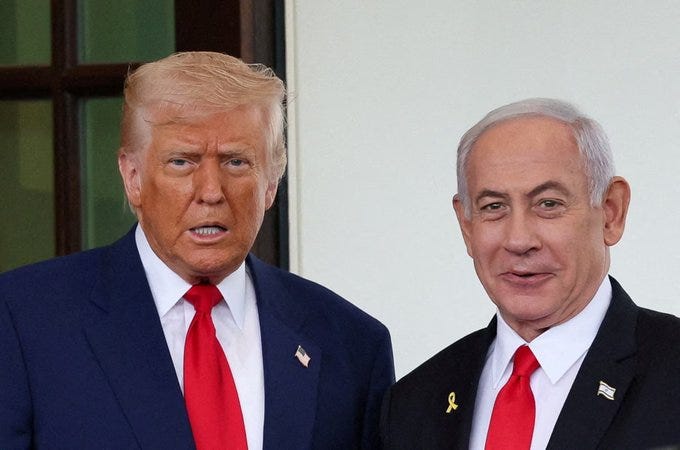
Yesterday, President Trump announced a two-week ceasefire with Iran. Within the hour, missiles were already flying again.
That tells you almost everything you need to know about where we stand.
Let’s back up and give you the full picture — because this war moved fast, the stakes are enormous, and most of what you’ve seen in your feed has been noise.
How we got here
On February 28, 2026, U.S. and Israeli forces launched nearly 900 strikes in 12 hours targeting Iranian missiles, air defenses, military infrastructure, and leadership.  The opening salvo was historic in its brutality. The attacks killed Supreme Leader Ali Khamenei and several other Iranian officials. 
Here’s the part that will be debated for years: just before the strikes began, Omani foreign minister Badr Al-Busaidi said a “breakthrough” had been reached and Iran had agreed both to never stockpile enriched uranium and to full verification by the IAEA — adding that peace was “within reach.”  Talks were scheduled to resume on March 2nd. They never happened.
Trump administration officials have offered multiple explanations for launching the war anyway — to pre-empt Iranian retaliation against US assets, to destroy Iran’s missile capabilities, to prevent a nuclear weapon, to secure Iran’s oil resources, and to achieve regime change.  The explanations kept shifting. The bombs did not.
What Iran did next
Tehran hit back hard. Iran launched hundreds of drones and ballistic missiles at targets in Israel and at US military bases in Bahrain, Jordan, Kuwait, Qatar, Saudi Arabia, and the UAE. A drone struck Britain’s Akrotiri military base on Cyprus, and missiles were shot down over Turkey. 
The war spread quickly across the entire region. The conflict disrupted global travel and trade, halted flights in and out of the Middle East, and led to shipping reroutes to avoid the Strait of Hormuz and the Red Sea.  Oil markets shook. Fuel shortages rippled across Asia. The world’s most critical energy chokepoint — through which roughly 20% of global oil flows — was effectively shut down.
The Strait of Hormuz: the real center of gravity
You’ve heard the name. Here’s why it matters so much.
The Strait of Hormuz is a narrow passage between Iran and Oman — just 21 miles wide at its tightest point. Every day in normal times, roughly 17 to 21 million barrels of oil pass through it. Saudi oil. Emirati oil. Kuwaiti oil. Qatari LNG. If it closes, Asia runs short within weeks. Europe scrambles. Prices spike globally.
Iran used the strait as its most powerful non-military weapon. By threatening — and partially restricting — shipping through the Hormuz, Tehran forced the entire world to pay attention to the war in a way that no missile barrage could. Trump issued a deadline threatening the “complete demolition” of Iran’s power plants and bridges if Tehran did not fully reopen the Strait of Hormuz.  Iran called the threats “delusional.”
Then, at the last hour, a phone call from Pakistan changed everything.
The ceasefire — and what it actually says
Iran says it has accepted a two-week ceasefire, with talks set to begin on Friday in Pakistan’s capital, Islamabad, after President Trump agreed to suspend attacks on the condition that Tehran fully reopens the Strait of Hormuz. 
The truce was brokered by Pakistan, following fierce exchanges of airstrikes, missile attacks and threats that saw unprecedented strikes on Gulf nations, disrupted global shipping routes and heightened fears of a prolonged confrontation. 
The terms, as we know them: Iran’s military will coordinate passage of vessels through the Strait of Hormuz during the ceasefire. Iran and Oman plan to charge transit fees on passing ships, with Tehran planning to use the revenue for post-war reconstruction. 
Iran came with its own framework. Tehran’s 10-point peace proposal includes lifting sanctions, creating a war-loss fund, a potential US troop withdrawal from the Gulf, and recognition of Iran’s right to enrich uranium in exchange for a pledge not to build nuclear weapons.  It is unclear whether the US has agreed to any of it.
But the guns didn’t stop
Here’s the uncomfortable truth about this ceasefire: it started with explosions.
Missile attacks were reported across the Gulf region and Israel shortly after Trump announced the two-week ceasefire. Kuwait and the UAE said they were working to intercept incoming drone and missile threats. Qatar’s Ministry of Defense said it had successfully intercepted a missile attack. Bahrain’s Interior Ministry said sirens were sounding. 
And Israel made its position crystal clear within hours: Prime Minister Netanyahu confirmed support for the US decision to suspend strikes on Iran, but stressed the ceasefire does not extend to Lebanon.  Israel then bombed locations across Lebanon including the capital Beirut in devastating attacks that killed at least 89 people and wounded over 700. 
A ceasefire with an asterisk the size of a country.
So who’s winning?
The honest answer: nobody cleanly, and the next two weeks will determine a great deal.
Iran took devastating losses — its supreme leader killed, military infrastructure hammered, universities and cultural sites destroyed. But it survived 40 days as a functioning state, kept its weapons, and forced the world’s superpower to the table. Iran expert Trita Parsi said the potential talks in Islamabad could fail, “but the terrain has shifted.”  Iranian leaders are declaring the conflict is ending “on Iran’s terms.”  That’s partly propaganda — but only partly.
The US entered with overwhelming force and achieved the killing of Khamenei. But it did not achieve regime change, did not eliminate Iran’s nuclear capability, and did not keep the Hormuz open. Analyst Trita Parsi described the ceasefire as a strategic retreat by Trump, arguing the conflict had “become an absolute disaster” and forced the White House to seek a way out. “Trump needed an exit, and he took it.” 
The Gulf states — Bahrain, the UAE, Saudi Arabia, Kuwait — absorbed Iranian missiles on their own soil while hosting American forces. They want the strait open, Iran neutered, and to never be in this position again. They are not satisfied.
The world economy got a 40-day warning about what a closed Strait of Hormuz actually looks like. It will not forget.
What to watch next
Talks begin Friday in Islamabad. The questions that will define everything:
Will the US accept Iran’s right to enrich uranium — the point that blew up negotiations in February, before the war even started? Will Iran accept any verification regime that actually has teeth? And will Netanyahu — who is “widely suspected of having derailed the last round of talks” brokered by Oman  — allow a diplomatic solution to hold?
Two weeks is a very short runway.
The bottom line
Forty days of war. Thousands dead. The global oil supply held hostage. A ceasefire announced while missiles were still in the air.
This is not resolved. This is a pause — fragile, contested, already fraying at the edges in Lebanon. The Strait of Hormuz is open for now, and oil prices dropped on the news. But the fundamental questions that started this war — Iran’s nuclear program, American power in the Gulf, Israel’s security — remain completely unanswered.
What happens in Islamabad on Friday matters more than almost anything else happening on the planet right now.
We’ll be watching. And we’ll write you again the moment it breaks.
That’s what this letter is for.
— US Daily Letter | April 9, 2026