


By US Daily Letter Editorial Desk | March 15, 2026
Sixteen days ago, the United States and Israel launched what the Pentagon called “Operation Epic Fury” — a coordinated air campaign against Iran that has since become the most consequential military conflict in the Middle East since the 2003 invasion of Iraq. The strikes, initiated on February 28, 2026, aimed to induce regime change and neutralize Iran’s nuclear and ballistic missile programs.  What followed has drawn the entire region into a spiral of military escalation, humanitarian catastrophe, and a global economic shock that is being felt from gas pumps in Ohio to shipping lanes in the Indian Ocean.
Here is what every American should understand about where we are — and where this may be heading.
How Did We Get Here?
The road to this conflict was years in the making. As recently as late February, Oman’s Foreign Minister Badr Al-Busaidi described nuclear negotiations as reaching a “breakthrough,” with Iran reportedly agreeing both to never stockpile enriched uranium and to full IAEA verification. He called peace “within reach.”  Yet Washington and Tel Aviv remained skeptical, with Israel lobbying aggressively against diplomacy and threatening unilateral action if talks continued.  The strikes began just days before negotiations were set to resume.
The Trump administration has offered shifting rationales for the assault. Officials have cited the need to ward off an imminent Iranian threat, to preempt Iranian retaliation after an expected Israeli strike, to destroy Iran’s missile capabilities, to prevent a nuclear weapon, to secure Iran’s natural resources, and to achieve regime change by bringing the Iranian opposition to power  — a menu of justifications that critics have called strategically incoherent.
The Human and Military Toll
The toll on Iran’s population has been severe. Iran’s Health Ministry reports that at least 1,444 people have been killed and over 18,500 injured since February 28, with victims ranging in age from eight months to 88 years old.  Tehran’s governor has reported that at least 10,000 residential homes were damaged or completely destroyed  by US-Israeli strikes. The United Nations refugee agency estimates that up to 3.2 million people have been displaced inside Iran since the conflict erupted. 
Iran’s leadership has also been targeted directly. On the opening hours of the conflict, Israeli decapitation strikes killed Supreme Leader Ali Khamenei and several high officials at his residential compound.  His son, Mojtaba, has since been appointed as successor, though US Defense Secretary Pete Hegseth claimed the new supreme leader was wounded. 
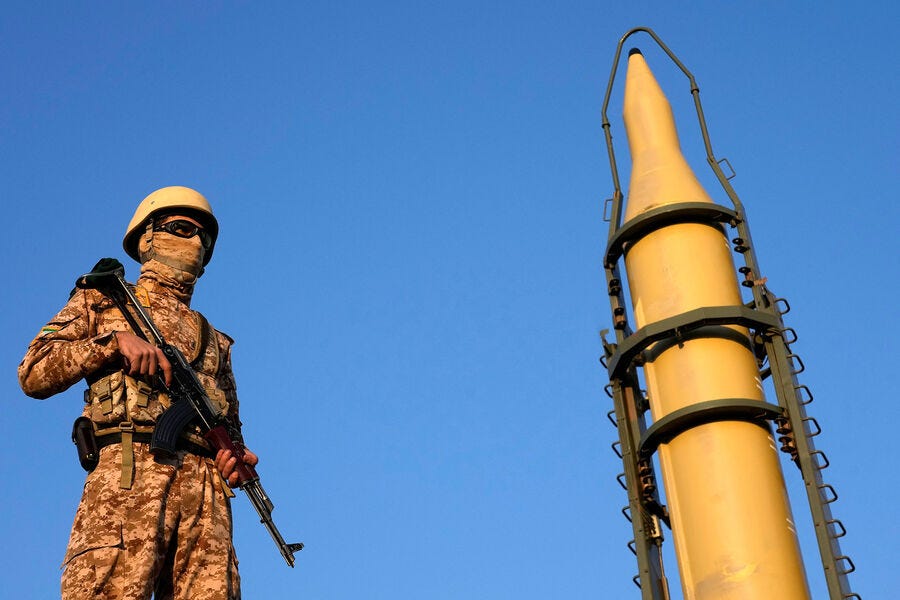
On the military side, Iran has retaliated by launching hundreds of drones and ballistic missiles at targets in Israel and at US military bases across Bahrain, Jordan, Kuwait, Qatar, Saudi Arabia, Turkey, and the UAE.  US Defense Secretary Hegseth claimed that at least 15,000 enemy targets have been struck — more than 1,000 per day  — numbers that critics say blur the line between military infrastructure and civilian areas.
The Diplomatic Dead End
Perhaps most alarming is the near-total collapse of diplomacy. The Trump administration has rebuffed efforts by Middle Eastern allies to begin ceasefire negotiations, with a senior US official indicating that military pressure should continue and that “there may be a time for diplomacy later, but that moment has not arrived.” 
Iran’s position is equally hardened. Foreign Minister Abbas Araghchi told CBS’s Face the Nation that Tehran has “never asked for a ceasefire” and sees “no reason” to negotiate, pointing to the fact that talks were ongoing when the strikes began: “We were talking, so why they decided to attack us?” 
Mediators including Oman and Egypt have tried and failed to open channels. Iran’s IRGC has reportedly told political leaders not to engage in any ceasefire discussions, believing that losing control of the Strait of Hormuz would mean losing the war.  With both sides dug in, analysts believe the conflict could extend well beyond its initial phase. 
The Global Economic Shockwave
Americans will feel this war at the register and the pump. The conflict has disrupted global travel and trade, halted flights across the Middle East, and forced shipping to reroute away from both the Strait of Hormuz and the Red Sea.  The International Energy Agency has agreed to release a record 400 million barrels of crude oil in an attempt to offset the disruption. 
Economic forecasters have warned of inflationary pressures and slowed global growth if the conflict persists, with the UN World Food Programme flagging significant long-term increases in global food prices.  Some Trump advisers are already warning that soaring gasoline prices could extract a steep political cost from the Republican Party ahead of the midterms. 
What the World Is Watching
International opinion is fractured. UK Prime Minister Keir Starmer, alongside French and German leaders, condemned Iran’s counter-strikes but made clear that Britain does “not believe in regime change from the skies.”  More than 250 US organizations have signed a letter calling on Congress to halt funding for the war, arguing that the $11.3 billion spent in the first six days diverts critical resources from domestic needs including food benefits. 
Meanwhile, UNESCO has urged protection for Iran’s heritage sites after strikes damaged the Golestan Palace, Naqsh-e Jahan Square, the Shah Mosque, and other World Heritage Sites. 
The Bottom Line
This is not a short war. With no ceasefire in sight, two entrenched military powers refusing diplomacy, and a region-wide spillover already underway in Lebanon, the Gulf states, and global energy markets, the conflict risks settling into a prolonged, costly confrontation. The stated goals — denuclearization, regime change, regional stabilization — may prove far harder to achieve through air power than through the negotiations that were, by all accounts, still progressing just days before the first bombs fell.
For American readers, the questions worth asking are simple: Were all diplomatic options truly exhausted? Who bears the cost if they weren’t? And what does a sustainable end to this conflict actually look like?
Those answers deserve far more clarity than Washington has provided so far.
This analysis reflects reporting from Reuters, Al Jazeera, the UK House of Commons Library, Encyclopedia Britannica, Wikipedia, and other public sources current as of March 15, 2026. US Daily Letter presents multiple perspectives and does not editorially endorse any military action.