


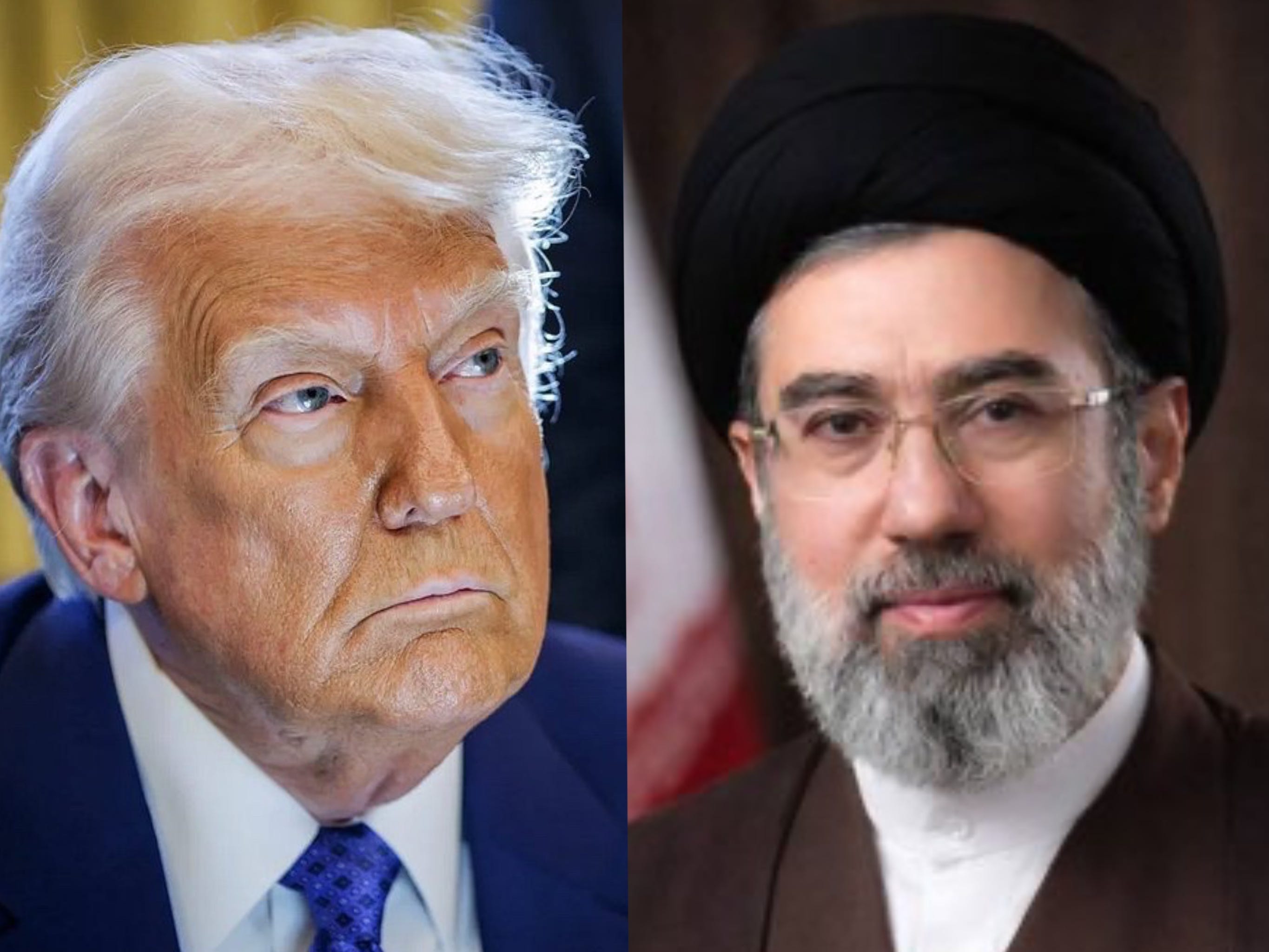
Sunday night, Donald Trump sat down and read Iran’s response to his latest peace proposal. Then he picked up his phone and posted twice on Truth Social within two hours.
The first post said Iran had been “playing games with the United States, and the rest of the World, for 47 years.” The second said: “I have just read the response from Iran’s so-called ‘Representatives.’ I don’t like it. TOTALLY UNACCEPTABLE!”
By Monday morning he was behind the Resolute Desk telling reporters he had not even finished reading it. “After reading that piece of garbage they sent, I didn’t even finish reading it,” he said. Later in the same session he called it “a stupid proposal.”
Three descriptions. One document. Garbage. Stupid. Totally unacceptable.
That is the diplomatic temperature on Day 73 of the Iran war. And it tells you almost everything you need to know about where this conflict is heading.
What Iran actually put on the table
Before we get to Trump’s fury, it helps to understand what Tehran actually sent, because the gap between the two positions is not a misunderstanding. It is structural.
Iran’s counter-proposal included recognition of its sovereignty over the Strait of Hormuz, a demand for compensation for war damages, the lifting of all US sanctions, and the release of frozen Iranian assets. Iran also offered, according to two regional officials who spoke to the Associated Press, to dilute part of its highly enriched uranium and transport the rest to a third country, with a request for 30 days of negotiations to finalize the details.
That last part is actually significant and got buried under the noise of Trump’s reaction. Iran moved, at least marginally, on the nuclear question. The offer to ship enriched uranium to a third country is not nothing. It is a negotiating position, not a surrender, but it is movement.
The problem is everything else on the list. Sovereignty over the Strait of Hormuz. War reparations. Sanctions lifted before discussions on the nuclear program even begin. Iranian state media framed Washington’s proposal as a demand for surrender. Washington framed Tehran’s response as a joke. Neither framing is entirely wrong, and that is exactly the problem.
What Trump said, word for word
The language Trump used Monday matters because it is not just venting. It signals the internal state of a negotiation and tells the other side, and the world, where the red lines actually are.
“I have a plan. You know, it’s a very simple plan. I don’t know why you don’t say it like it is. Iran cannot have a nuclear weapon,” Trump told reporters in the Oval Office. He added that any agreement would require Iran to pledge to permanently abandon its nuclear program. No enrichment. No pathway. No ambiguity.
Then he said something that reveals the deeper tension inside the White House’s own strategy: “You know, in war, you have to change, you have to be flexible, you have a lot of plans, but you have to do different plans in different days. But I have a great plan. But the plan is they cannot have a nuclear weapon.”
Read that carefully. The president described himself as flexible and then immediately stated a position that is, by definition, non-negotiable. You cannot be flexible and simultaneously have a single absolute condition. That contradiction is not a slip of the tongue. It reflects the genuine bind the administration is in: Trump wants a deal, needs a deal politically, and yet the core American demand, zero Iranian enrichment forever, is the one thing Iran has consistently said it will never accept.
The ceasefire, he added, was on “massive life support” and was “unbelievably weak.”
What Iran said back
Tehran did not go quiet. Iran’s foreign ministry spokesman Esmail Baghaei responded Monday with language that matched Trump’s in tone if not in volume.
He said Iran had not demanded any concessions, only its “legitimate rights.” He accused Washington of continuing to insist on “unreasonable demands.” And he described Iran’s proposal as reasonable and generous, which is almost exactly the opposite of how Trump described it.
Iranian state media framed Tehran’s position as a refusal to bow, with officials vowing they would “never” surrender to American pressure. Iran’s new supreme leader, Mojtaba Khamenei, who has not been seen publicly since the war began and whose whereabouts were unclear for weeks, reportedly issued new directives for the “continuation of operations and the powerful confrontation with the enemies” while meeting with the joint military command.
That is not the language of a government preparing to make concessions.
The Strait and the clock
While the two governments trade insults through press briefings and social media posts, the economic clock is ticking loudly.
The Strait of Hormuz has been effectively closed for ten weeks. Saudi Aramco warned Monday that if the reopening is delayed by a few more weeks, market normalization will not happen until 2027. Even if the strait reopened today, it would still take months for energy markets to rebalance.
That means the pain at American gas pumps, which is already substantial, is not going away regardless of what happens in these negotiations in the near term. The damage is already baked in. And every week the strait stays contested, it gets harder to unwind.
Oman’s foreign minister said publicly Monday there is an “urgent need” to free the ships stranded along the strait. Britain and France are leading talks among several dozen countries on a coalition to reestablish freedom of navigation, but have said plainly that coalition will not activate until there is a sustainable ceasefire and the maritime industry is confident ships can transit safely. Right now neither condition exists.
The China trip and what it might change
Trump flies to Beijing this week, and the Iran negotiation follows him there whether he wants it to or not.
A regional source told CNN the talks are unlikely to make significant progress until Trump meets with Chinese President Xi Jinping. The theory is that China, as Iran’s largest oil customer and one of its few remaining diplomatic partners, holds genuine leverage over Tehran that Washington does not. If Xi were to apply pressure on Iran to make concessions on the nuclear question, or at minimum on the Strait, it could shift the dynamic in ways that 73 days of American military posturing have not.
Whether Xi is willing to do that is a different question. China has benefited from discounted Iranian oil throughout this conflict. It has its own reasons to want the Strait open, but it also has every reason to avoid being seen as doing America’s bidding in the Middle East. The likely outcome in Beijing is careful language, vague commitments, and what one analyst described as “managed détente with thin deliverables.”
That is diplomatic shorthand for not much.
The bottom line
Trump called Iran’s proposal garbage, stupid, and totally unacceptable inside a single 24-hour period. Iran called Trump’s proposal a demand for surrender and vowed never to bow. The ceasefire is holding in the narrowest technical sense while both sides continue to exchange fire in the Strait. Oil is above $100 a barrel. The world’s largest energy company says price normalization may not come until next year.
This is not a negotiation approaching resolution. This is a negotiation that has not yet found the shape of a deal that both sides can survive politically. Trump cannot accept an Iran with nuclear capability. Iran cannot accept terms that look like defeat. And neither side has yet found the formula that gets them both somewhere they can stand.
Until someone does, the strait stays contested, the ceasefire stays on life support, and the rest of the world keeps paying the bill.
We will write you the moment something actually moves.
That’s what this letter is for.
— US Daily Letter | May 11, 2026