


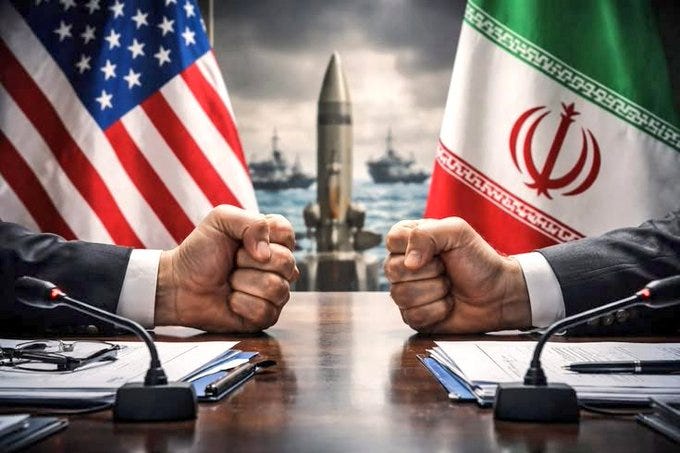
Day 89. A ceasefire nobody is honoring. Strikes on the same city twice in one week. And a president who says negotiations are going “nicely.”
At 1:30 in the morning local time on Thursday, three explosions shook the outskirts of Bandar Abbas, a port city on Iran’s southern coast, right at the mouth of the Strait of Hormuz. Air defense sirens briefly activated. The US military had just struck an Iranian ground control station that was about to launch a fifth drone, according to a US official, who described the action as “measured, purely defensive, and intended to maintain the ceasefire.”
Iran did not see it that way. The IRGC issued a statement saying its response was “a serious warning” and that American aggression “will not go unanswered.”  Within hours, Kuwait’s army reported its air defenses were responding to hostile missiles and drone threats.
This is the ceasefire. This is what maintaining it looks like on Day 89.
Earlier that same Wednesday, Trump was sitting at a Cabinet meeting at the White House telling reporters the Iranians “want very much to make a deal.” “We’re not satisfied with it, but we will be,” he said. “Either that or we’ll have to just finish the job.” The White House said negotiations were proceeding “nicely.”
That evening, the bombs fell on Bandar Abbas.
The city that keeps getting hit
This was the second US strike on Bandar Abbas in less than a week. That is not a coincidence. It is a geography lesson.
Bandar Abbas is Iran’s most strategically important city. It sits directly on the Strait of Hormuz. It houses Iran’s main commercial port, its naval headquarters, and critical oil infrastructure. US forces shot down four Iranian drones and struck a drone ground control station there. The message being sent with every strike on that city is the same: the US will not allow Iran to militarize the chokepoint through which a fifth of the world’s oil flows.
Iran’s message back, sent with drones launched toward Kuwait in the middle of the night, is equally clear. It will not surrender control of its own coastline without a fight.
Both messages are being sent simultaneously with a ceasefire technically in place. That is the central absurdity of where this war stands today.
What “largely negotiated” actually means
Last week Trump said a deal with Iran was “largely negotiated.” This week he said the Iranians want to make a deal but he is not satisfied yet. Those two statements, delivered days apart, describe a negotiation that is either almost finished or nowhere near finished, depending on which day you ask.
The gap between them is the nuclear question, the same one that blew up the Islamabad talks in April, the same one that has been the wall in every conversation since February 28th. “Iran cannot have a nuclear weapon. I’m doing that for the world. I’m not doing it just for us,” Trump said at the Cabinet meeting Wednesday.
Iran’s position has not changed. Its atomic energy chief has stated the country will not accept limits on its enrichment program. The US wants zero enrichment permanently. Nobody has moved on this in 89 days.
What has changed is the pressure. The oil inventories that cushioned the first two months of this war are running low. Analysts say there are four to six weeks before gasoline, diesel, and jet fuel prices shoot higher as the buffers run out. Gas is already at $4.55 a gallon nationally, with some states above $5. The economic window for a prolonged stalemate is closing, and both governments know it.
The Oman threat that changed the conversation
Yesterday Trump did something that rattled the entire Gulf region. Asked about a reported plan that would see Iran and Oman jointly manage the Strait of Hormuz and charge transit fees to passing ships, he did not just reject it. He threatened Oman directly. “Oman will behave just like everybody else or we’ll have to blow ’em up,” Trump told reporters.
Oman is a neutral country that has served as a back channel between Washington and Tehran for decades. It brokered the original nuclear deal under Obama. It was the country that announced a diplomatic breakthrough the night before the bombs fell on February 28th. It has been, throughout this war, one of the only parties both sides trusted enough to talk through.
Trump just threatened to bomb it.
The practical consequences are significant. If Oman feels it can no longer serve as a neutral mediator without becoming a military target, the diplomatic off-ramp that everyone has been quietly counting on gets narrower. The Gulf states that have been hosting American forces while absorbing Iranian missiles are already deeply uncomfortable. Threatening one of the most stable and cooperative among them does not make that situation easier to manage.
What to actually watch
The next few days matter more than most. A second round of talks has been discussed. The ceasefire, such as it is, is being tested every night over the Strait. Oil inventories are running out. And Trump’s own timeline, “either that or we’ll have to just finish the job,” is being compressed by economics whether he likes it or not.
“Finish the job” means a resumption of full-scale strikes. Nobody in the Gulf wants that. Nobody in the global economy wants that. Whether the fear of it is enough to close the gap on the nuclear question before the pressure becomes unbearable is the only question that matters right now.
The bombs fell on Bandar Abbas at 1:30 in the morning. The ceasefire is still technically in place. The deal is still “largely negotiated.”
Day 89.
That is what this letter is for.
— US Daily Letter | May 28, 2026