


Letter from US Daily Letter HQ
February 13, 2026
From Munich’s corridors of power to the tense diplomacy over Iran’s nuclear program, this weekend marks a critical inflection point in global security. Here’s what you need to understand as the world’s leaders gather, negotiate, and prepare for what comes next.
MUNICH: The World’s Security Elite Convene as Order Crumbles
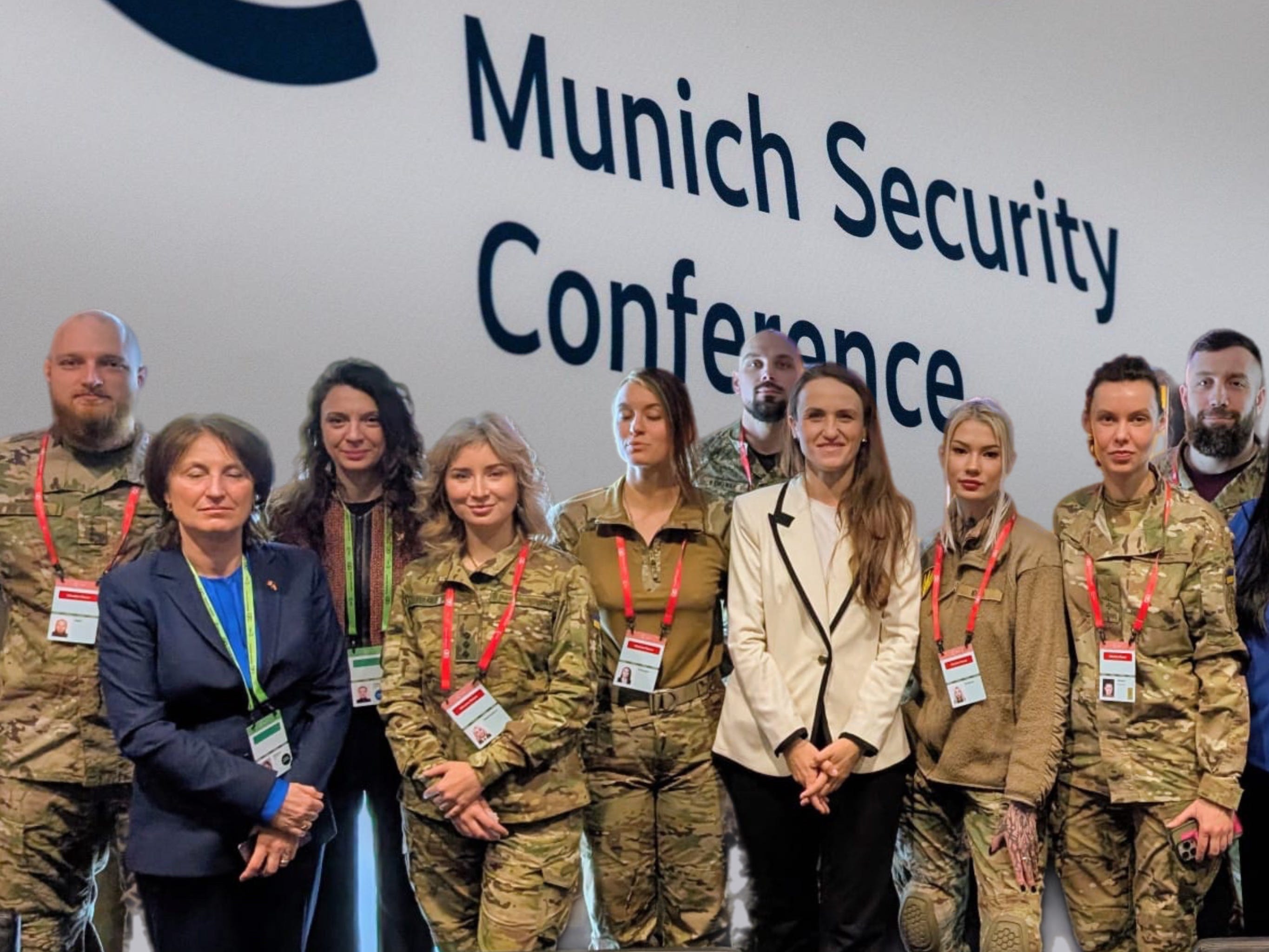
The 62nd Munich Security Conference opens today under perhaps the most ominous theme in its 63-year history: “Under Destruction.”
Over 1,000 participants from 115+ countries—including 60 heads of state, 50+ foreign ministers, the NATO Secretary General, and leaders from across the geopolitical spectrum—are descending on the Hotel Bayerischer Hof through Sunday for what has become the single most important annual forum for international security discussions.
The stakes: This year’s conference arrives at what organizers call “a fundamental inflection point”—longstanding alliances questioned, the rules-based order eroding, conflicts escalating from Ukraine to Gaza to the Pacific.
The Munich Security Report 2026, released ahead of the conference, warns of the rise of “wrecking-ball politics”—political forces focused on destruction rather than reform. European security officials are openly discussing “detachment issues” as uncertainty swirls around U.S. commitment to NATO under President Trump’s second term.
Key figures attending:
∙ Ukrainian President Volodymyr Zelenskyy
∙ U.S. Secretary of State Marco Rubio
∙ NATO Secretary General
∙ European Space Agency Director General Josef Aschbacher
∙ German Foreign Minister Johann Wadephul (the host)
∙ Plus 270 side events hosted by think tanks and policy organizations
Topics on the table:
∙ The future of transatlantic relations under Trump 2.0
∙ European defense independence
∙ Russia’s war in Ukraine entering its fourth year
∙ China’s challenge to the Western-led order
∙ Iran nuclear diplomacy and Middle East stability
∙ Security implications of emerging technologies (AI, space, cyber)
Why Munich matters: Unlike the UN or formal summit diplomacy, Munich operates as an informal crossroads where adversaries can talk, allies can argue openly, and new ideas get floated before they become official policy. It’s where Putin delivered his famous 2007 speech challenging U.S. hegemony, where Zelenskyy warned of impending Russian invasion weeks before it happened in 2022.
This weekend, watch for signals about:
∙ Whether European NATO members are seriously preparing for reduced U.S. security guarantees
∙ How Middle Eastern allies are hedging between Washington, Beijing, and Moscow
∙ Whether there’s any path forward on Ukraine that both Kyiv and its backers can accept
The conference runs through Sunday, with livestreams available for major sessions.
IRAN-U.S.: Fragile Diplomacy on a Knife’s Edge
After last week’s indirect talks in Oman—the first since the U.S. and Israel struck Iranian nuclear facilities last June—the diplomatic path forward remains treacherous.
Where things stand:
Both sides called the February 6 talks in Muscat “a good start” and agreed to continue negotiations after consultations with capitals. But the fundamental gaps remain vast, and the threat of war looms large.
Iran’s red lines (articulated this week by security chief Ali Larijani):
∙ Talks limited exclusively to nuclear program
∙ Ballistic missile program off the table (“domestic matter…not subject to negotiation”)
∙ Regional proxy support non-negotiable
∙ Zero uranium enrichment “irrelevant” - Iran insists on maintaining enrichment capabilities
∙ Won’t move uranium stockpile offshore
U.S. position:
∙ Seeking “zero nuclear capability”
∙ Wants comprehensive talks covering missiles and regional proxies
∙ Demanding elimination of Iran’s 400kg stockpile of 60% enriched uranium (enough for 9+ nuclear weapons if further enriched)
∙ Trump threatening “very steep consequences” and “something very tough” if no deal
The military backdrop:
∙ USS Abraham Lincoln carrier group positioned off Iran’s coast in the Arabian Sea
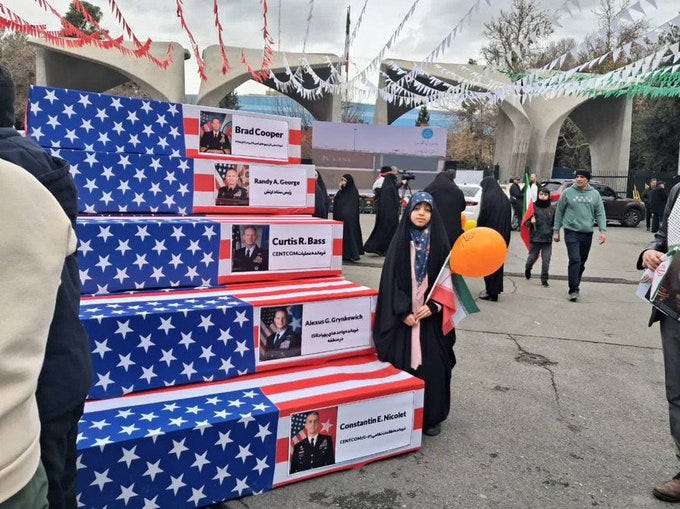
∙ Admiral Brad Cooper (CENTCOM commander) attended Oman talks in full dress uniform
∙ Trump suggested second carrier group might deploy: “We have an armada that is heading there and another one might be going”
∙ Iran shooting down U.S. drones, attempting to stop U.S.-flagged ships in Strait of Hormuz
∙ Iran threatening “unprecedented retaliation” including strikes “at the heart of Tel Aviv” if attacked
The Israel factor:
Prime Minister Netanyahu met with Trump on Wednesday, urging that any deal must address Iran’s missile program. Israel views Iran’s ballistic arsenal as an existential threat and has warned it’s prepared to launch unilateral strikes if Iran crosses unnamed “red lines.”
Iran’s Larijani accused Israel of “fabricating pretexts” to derail negotiations and provoke war.
Expert assessment:
Analysts remain deeply skeptical a breakthrough is possible. As one told the Times of Israel: “It’s very difficult to see them conceding enough in talks for the US credibly to be able to claim that it’s made a breakthrough. And this is where I think military conflict is more likely than not.”
The Soufan Center’s analysis: Trump hoped Iran’s weakness after recent uprisings would force concessions, but Tehran is showing no willingness to compromise on core issues it rejected in 2025 talks.
Timeline: A second round of talks is confirmed but not yet scheduled. Gulf Arab states, fearing they’d be dragged into any U.S.-Iran war, are watching nervously.

OLYMPICS: Milan-Cortina Games Enter Second Week
The 2026 Winter Olympics, which opened last Friday with twin cauldrons lit in Milan and Cortina d’Ampezzo, continue through February 22.
Weekend highlights:
∙ Men’s skeleton finals (Britain’s Matt Weston led at halfway mark)
∙ Women’s skeleton begins Saturday finals
∙ Figure skating men’s free program
∙ Snowboard cross knockout rounds
∙ Ice hockey continues (Finland-Canada women’s match postponed to Feb 12 after norovirus outbreak)
∙ Cross-country skiing, biathlon, curling round-robin play
Political undertones: Israel’s delegation was met with scattered boos during the opening ceremony, reflecting ongoing tensions over the Gaza conflict. Italy is using the games to showcase its capacity for major international events with significant Alpine infrastructure investments.
ALSO THIS WEEKEND:
LUNAR NEW YEAR APPROACHES: The Year of the Snake begins February 17 with celebrations across Asia and diaspora communities worldwide. Preparations underway for what’s known as Spring Festival in China, Tết in Vietnam, and Seollal in South Korea.
VALENTINE’S DAY TOMORROW: Beyond romance, many are using February 14 as an occasion to celebrate friendships and family connections.
GAZA/UKRAINE: Violence continues despite ceasefire frameworks. At least 23 Palestinians killed in airstrikes Friday. Russian cluster munitions struck a Druzhkivka market, killing 7 civilians.
WORLD RADIO DAY (TODAY): UNESCO marks February 13 as a celebration of radio’s enduring power to inform and connect communities globally.
WHAT TO WATCH NEXT WEEK:
The combination of Munich discussions, Iran diplomacy, and ongoing conflicts creates a volatile mix. Key questions:
1. Will Munich produce any consensus on European defense independence? Or will it showcase deepening transatlantic divisions?
2. Can U.S.-Iran talks advance, or are we watching diplomatic theater before military action? The presence of CENTCOM’s commander at negotiations and Trump’s carrier threats suggest time is short.
3. How will Israel’s pressure campaign affect the Iran talks? Netanyahu’s Washington visit and threats of unilateral action could either force U.S. toughness or derail talks entirely.
4. What signals emerge from European capitals about accommodating or resisting Trump’s foreign policy? Munich provides the venue for Europeans to coordinate—or reveal their divisions.
The weekend marks a pause before decisions that could reshape global security for years. Diplomacy continues, but so do the military buildups, the threats, and the fundamental disagreements about how the world should be ordered.
For now, watch Munich. The conversations happening in those conference rooms and hotel corridors this weekend may determine whether 2026 is remembered for diplomatic breakthroughs or catastrophic escalations.
Stay informed. The world doesn’t pause on weekends—neither do we.
— US Daily Letter