


THE STRAIT OF HORMUZ: THE CHOKEPOINT THAT COULD DEFINE 2026
The two-week ceasefire between the United States and Iran expires tomorrow — and right now, nobody knows what comes next.
Here’s the quick version of how we got here: On February 28, Israel and the United States launched airstrikes against Iran, killing its supreme leader and many other officials and destroying a large number of military and government targets. Iran responded with missile and drone strikes against Israel and U.S. bases, and by closing the Strait of Hormuz.  That closure sent shockwaves through global energy markets and triggered a 40-day escalation that brought the region to the edge of a wider war.
Trump announced a two-week suspension of attacks on Iran, contingent on Iran reopening the Strait of Hormuz — calling it a “big day for world peace.”  Pakistan brokered the truce. The world exhaled. For about 48 hours.
Then things got complicated again. Iran said Saturday it had reinstated control of the Strait and reversed course on its decision to reopen the critical waterway, citing Trump’s refusal to end the U.S. naval blockade of Iranian ports.  On Sunday, Trump said the U.S. Navy’s USS Spruance intercepted and seized an Iranian-flagged cargo ship, the Touska, in the Gulf of Oman after firing on its engine room. 
As of this morning, oil prices surged, with West Texas Intermediate jumping more than 6% to $89 per barrel and Brent climbing to $95.50, while U.S. stock futures fell as the two sides teetered on the brink of renewed conflict. 
The economic damage is already severe. The Strait of Hormuz — which normally carries roughly one-fifth of global oil supply — has been effectively closed for nearly two months, with experts estimating supply disruptions of around 13 million barrels of crude per day and a cumulative shortfall already exceeding half a billion barrels.  Experts warn that even if a deal is signed today, it could take months to unwind the damage.
The ceasefire deadline is Tuesday. Watch this space closely.
THE POPE TAKES ON AFRICA — AND TRUMP
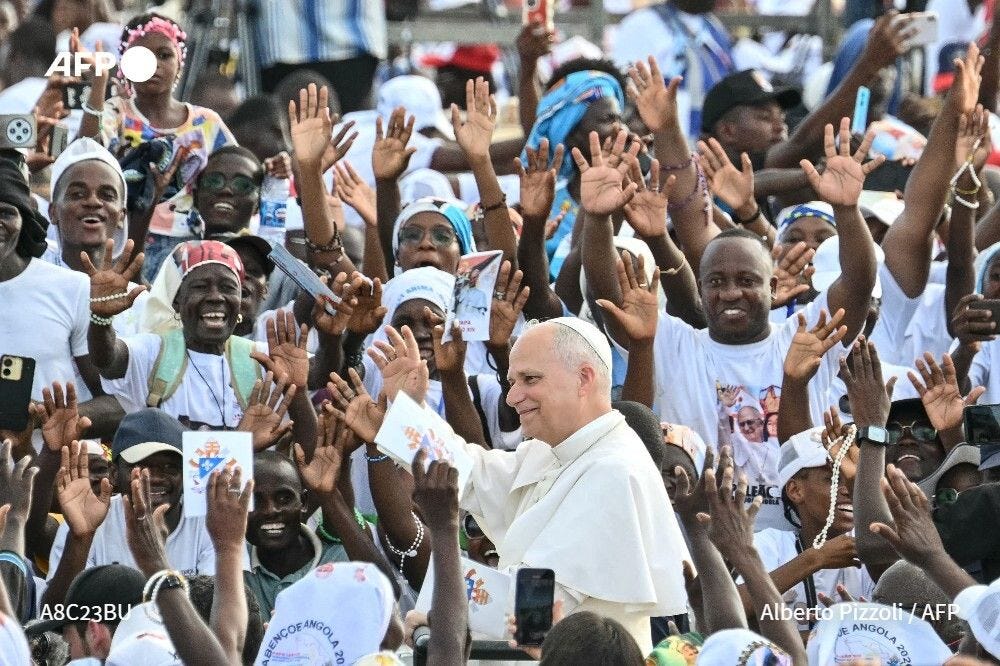
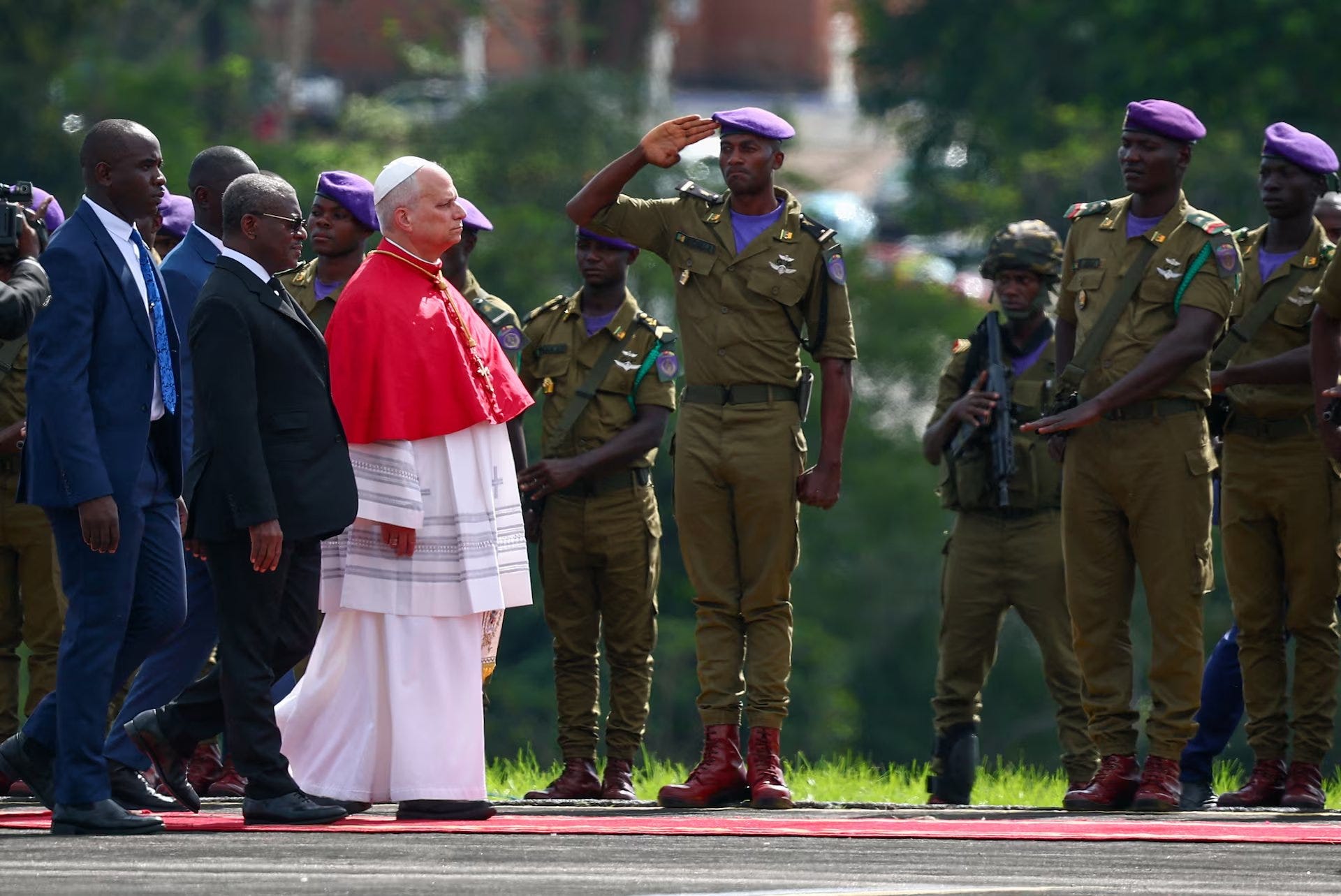
While diplomats scramble in Islamabad, Pope Leo XIV is wrapping up an 11-day, four-nation apostolic journey across Africa — visiting Algeria, Cameroon, Angola, and Equatorial Guinea through April 23. 
This trip has been anything but quiet. The first American-born pope has delivered remarks seen as critical of the U.S.-Israeli war in Iran and U.S. policy, including calling Trump’s threat to end Iran’s civilization “unacceptable.” Trump responded by calling the Catholic leader “weak” and “terrible for foreign policy.” 
Standing next to Cameroon’s 93-year-old President Paul Biya — himself accused of presiding over decades of authoritarian rule — Leo didn’t hold back: “In order for peace and justice to prevail, the chains of corruption — which disfigure authority and strip it of its credibility — must be broken.” 
In Angola, addressing tens of thousands at an open-air Mass, Leo urged the country to move beyond the “enmity and division, squandered resources and poverty” left by its civil war-scarred past, telling the faithful: “Today, there is a need to look to the future with hope and to build that hope.” 
Today, Leo heads to Equatorial Guinea for the final stop — a diplomatically delicate challenge, as the former Spanish colony is run by Africa’s longest-serving president, Teodoro Obiang Nguema Mbasogo, who has been in power since 1979 and is accused of widespread corruption and authoritarianism.  Don’t expect the Pope to go easy on him.
THE GLOBAL ECONOMY: “IN THE SHADOW OF WAR”
The International Monetary Fund dropped its annual World Economic Outlook last week, and the title says it all: Global Economy in the Shadow of War.
The pre-conflict global growth forecast for 2026 had been set at 3.4%. War in the Middle East has halted that momentum.  Under the assumption that the conflict remains limited, global growth is now projected at 3.1% in 2026 — with risks decisively on the downside.
The IMF’s warning is pointed. The closing of the Strait of Hormuz and serious damage to critical facilities in a region central to global hydrocarbon supply raise the prospect of a major energy crisis should hostilities continue.  In a severe scenario where energy disruptions extend further into the year, global growth could fall to 2% and inflation could exceed 6%.
The countries most exposed: emerging market and developing economies — especially commodity importers with preexisting vulnerabilities — where the downside is most pronounced. That means much of Africa, Latin America, and South Asia is staring down a compounding crisis not of their making.
THE BOTTOM LINE
Three stories. One through-line: the world’s stability is being tested from multiple directions at once — a war with no clean ending, a Pope challenging both tyrants and the American president, and an IMF warning that the economic bill is already being tallied.
For Americans, the stakes are real. Oil prices hit your gas pump. A wider war hits your 401(k). And what happens in the Strait of Hormuz this week may be the most consequential 72 hours of the year.
Stay informed.
— US Daily Letter